
An Essential Guide to Fall Storage Prep for Winter
An Essential Guide to Fall Storage Prep for Winter
Middletown Self Storage
August 24th, 2026
Why Fall Storage Prep Can't Wait Until the Last Minute
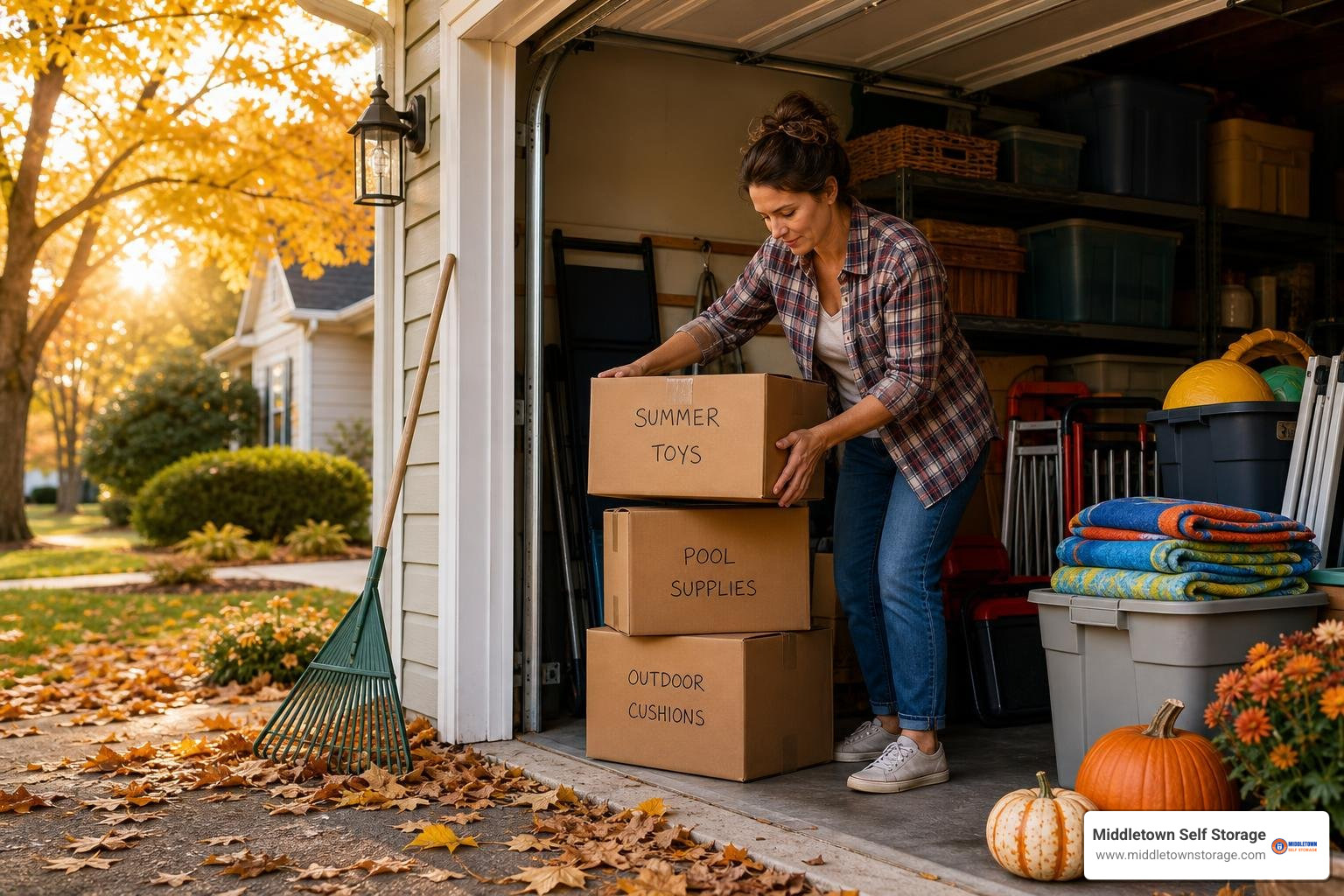
Fall storage prep is the process of cleaning, packing, and storing summer items — like patio furniture, lawn equipment, and seasonal clothing — before cold weather arrives and causes damage.
Here's a quick overview of what fall storage prep involves:
- Identify what needs to come inside or go into storage (outdoor furniture, pool gear, garden tools, summer clothing)
- Clean and dry every item thoroughly before packing to prevent mold, mildew, and rust
- Pack smart using sturdy plastic bins, breathable bags, and clear labels
- Choose the right storage — climate-controlled units for sensitive items, standard units for tools and furniture
- Protect your unit from pests and moisture using absorbers and sealed containers
- Start early — August or early September is ideal, well before the first frost hits
Most people wait too long. The first cold snap arrives, the patio cushions are still outside, and suddenly a scramble turns into real damage. Metal rusts. Fabric molds. Wood warps.
According to home maintenance experts, deferred seasonal maintenance is the single largest driver of emergency repair costs over a homeowner's lifetime, and fall prep is where that cost is most preventable.
If you live on Aquidneck Island, the stakes are even higher. Rhode Island's coastal humidity and unpredictable autumn weather create conditions that can destroy stored belongings faster than in drier inland climates.
Getting ahead of the season isn't just good organization, it's smart protection for things you've invested in.
Why Fall Storage Prep is Essential for Homeowners
When the calendar rolls over to late summer and early autumn, it is easy to get caught up in the back-to-school rush and the beauty of changing leaves. However, this transition window is the absolute best time to protect your home and belongings.
Proactive preparation acts as an insurance policy against Rhode Island's harsh, damp winter elements. From a financial standpoint, taking care of seasonal transitions yields an incredibly high return on investment. According to the U.S. Department of Energy, simple tasks like air sealing a home can reduce annual heating and cooling costs by 10 to 20 percent.
Furthermore, a routine seasonal service on your home's heating system is the best money spent on a house every year. Booking this service early in August or September helps you avoid the dreaded "no heat" emergencies when temperatures plunge.
To put this in perspective, skipping a routine tune-up can lead to catastrophic system failures on freezing winter mornings, resulting in emergency repair bills that dwarf the cost of a simple preventive checkup. To tackle your transition successfully, we recommend using the "consequence-first principle."
This means prioritizing your fall preparation tasks by the severity of their potential failure consequences, rather than what is most convenient. For example, disconnecting a garden hose from an exterior spigot takes two minutes, but forgetting to do so can cause a pipe to burst, flooding your basement and causing thousands of dollars in water damage.
By taking control of your fall storage prep early, you secure your home, preserve the life of your outdoor gear, and create a sense of "earned shelter"- that warm, cozy feeling of knowing your home and belongings are completely safe and ready for winter.
What to Pack Away: Summer Gear and Outdoor Furniture
Before the damp coastal air and winter frost settle over Newport and Portsmouth, you need to identify which summer essentials cannot survive outdoors.
Leaving these items exposed to freezing rain, snow, and salt air will quickly degrade their materials, leading to rust, mold, and warping. Key items that should be packed away include:
- Patio dining sets, umbrellas, and chairs
- Outdoor cushions, pillows, and hammocks
- Pool toys, inflatables, and beach gear (like surfboards and beach chairs)
- Kayaks, paddleboards, and summer sports equipment
- Grills, fire pits, and outdoor cooking accessories
Cleaning and Preparing Patio Furniture for Fall Storage Prep
Before you stack your patio furniture in a garage or transport it to a storage unit, it must be meticulously cleaned and dried. Storing damp patio furniture is a recipe for mold and mildew disaster. Start by wiping down metal, plastic, or wood frames with mild soap and water. For metal furniture, inspect the frames for any signs of chipped paint or rust.
Applying a thin coat of car wax or a rust-inhibitor spray to wrought iron or steel frames before storage will keep the damp winter air from eating away at the metal. When it comes to fabric cushions and umbrellas, brush off loose dirt, spot-clean any stains, and let them air-dry completely in the sun.
Never pack cushions away while they are even slightly damp. To protect them from dust and pests, store cushions separately in heavy-duty, breathable storage containers.
If you need to stock up on the right packing materials, you can read our expert recommendations in Pack Like a Pro with These Must-Have Storage Supplies.
Winterizing Lawn Equipment and Garden Tools
Your lawnmower, leaf blower, and weed whacker have worked hard all spring and summer. Now, they deserve proper retirement prep so they start up effortlessly next spring.
The single most important step in winterizing gas-powered equipment is managing the fuel. Modern gasoline contains ethanol, which naturally attracts moisture over time.
If left in a fuel tank over the winter, the ethanol will separate, settle, and leave a gummy residue that clogs the carburetor. You have two options:
- Run the tank dry: Let the engine run until it completely runs out of gas.
- Use a fuel stabilizer: Fill the tank with fresh fuel, add a high-quality fuel stabilizer, and run the engine for five minutes to ensure the treated fuel circulates throughout the entire system.
Once the fuel is handled, clean off accumulated grass clippings, dirt, and debris from the deck and blades.
Wipe down your hand tools like shovels, rakes, and pruners and apply a light coat of oil to metal parts to prevent rust during the damp winter months.
Protecting Sensitive Items from Coastal Rhode Island Weather
Living on Aquidneck Island means enjoying beautiful ocean views, but it also means dealing with high humidity, salt air, and rapid temperature swings. As seasons transition from summer to fall, these humidity shifts can spell disaster for items stored in standard, non-insulated spaces like garages, attics, or outdoor sheds.
When warm, humid air collides with dropping temperatures, condensation forms. This moisture buildup is the primary cause of mold, mildew, rust, and wood rot.
Choosing Climate-Controlled Units for Fall Storage Prep
To protect your highly valuable or sensitive items, a standard storage space simply won't cut it. Climate-controlled storage units are engineered to maintain a stable environment, keeping both temperature and relative humidity levels within a safe, consistent range year-round. You should always opt for climate control when storing:
- Wooden furniture: Extreme humidity swings cause wood to expand and contract, leading to warping, cracking, and split joints.
- Electronics: Moisture from humidity can corrode delicate internal circuitry.
- Leather goods: Leather is highly susceptible to mold growth and cracking when exposed to fluctuating moisture levels.
- Important documents and photos: Damp air softens paper, causing pages to stick together and ink to run.
Investing in a climate-controlled environment ensures your prized possessions remain in the exact same condition as the day you put them away. To learn more about how humidity affects your belongings, read our guide on How to Choose a Humidity-Free Storage Unit.
Storing Seasonal Clothing and Holiday Decor
As the autumn chill sets in, it is time to swap your light summer wardrobe for heavy winter coats, sweaters, and boots. Before packing your summer clothes away, wash or dry-clean them thoroughly. Unwashed stains can set permanently over the winter, and body oils can attract fabric-eating pests.
Avoid storing clothing in sealed plastic bags or airtight plastic bins for long periods, as trapped moisture can lead to musty odors and mildew. Instead, use breathable fabric storage garment bags or storage chests. To get more tips on keeping your textiles fresh, check out our blog post Don't Let Your Stuff Sweat in Storage.
This seasonal transition is also the perfect time to pull out your holiday decorations. When packing up your fall and Halloween decor to make room for winter holidays, remember to remove batteries from all electronic props, lights, and toys. Corroded batteries can ruin expensive decorations permanently.
Store delicate ornaments in specialized segmented boxes, wrapping fragile pieces in bubble wrap or acid-free paper, and keeping them upright.
Organizing Your Storage Unit for Seamless Seasonal Swaps
A storage unit is only as helpful as it is organized. If you toss items in without a plan, you will find yourself digging through a mountain of boxes just to find a snow shovel or holiday wreath.
To create an efficient, stress-free seasonal storage system, use these three simple rules:
- Label meticulously: Write detailed descriptions on the sides of your boxes (e.g., "Halloween Lights & Lawn Stakes" instead of just "Holiday"). Consider color-coding your labels by season (e.g., orange for fall, red for winter, green for summer).
- Think vertically: Use heavy-duty freestanding shelving units inside your storage space. This keeps your boxes organized, prevents bottom boxes from collapsing under heavy weight, and maximizes your vertical space.
- Create an "easy-access zone": Place summer gear that you won't need for several months toward the back of your unit. Keep winter essentials like snowblowers, winter coats, holiday decorations, and emergency supplies right at the front near the door.
Choosing the right storage unit size is key to keeping your home clutter-free. Use our handy Self Storage Calculator to estimate your space requirements, or refer to our quick guide below:
Unit Size Equivalent Space Best For
5' x 5' Small Walk-in Closet Holiday decor, seasonal clothing, small sports gear, and a few boxes.
5' x 10' Large Walk-in Closet Patio bistro set, bicycles, surfboards, and multiple storage bins.
10' x 10' Half of a 1-Car Garage Full patio dining sets, kayaks, lawnmowers, and small motorcycles.
10' x 15' Large Master Bedroom Bulk seasonal gear, retail inventory, and large outdoor furniture sets.
10' x 20' Standard 1-Car Garage Vehicles, classic cars, small boats, ATVs, and large household moves.
Preparing Vehicles and Recreational Gear for Winter
For many Rhode Island residents, summer means spending time on the water or exploring the coast in an RV, classic car, or motorcycle. Properly winterizing these high-value recreational investments can save you thousands of dollars in repair costs down the road. If you are storing a boat or RV, the winterization process must be thorough:
- Decontaminate and wash: Saltwater residue, road grime, and traffic film can bond to your vehicle's finish over the winter, causing permanent corrosion and paint etching. Give the exterior a deep clean, dry it completely to prevent trapped moisture spots, and apply a protective marine-grade wax or paint sealant.
- Clean the interior: Remove all trash, crumbs, and food items. A single stray wrapper can attract rodents looking for a warm winter home. Vacuum the carpets and wipe down surfaces.
- Engine maintenance: Change the oil, flush the cooling system, and add a fuel stabilizer to a full tank of gas to prevent fuel system degradation.
- Battery care: Connect your vehicle's battery to a smart battery tender, or remove the battery entirely and store it in a cool, dry place.
- Moisture control: Place desiccant packs or moisture-absorbing buckets inside the cabin of your boat or RV to prevent musty odors and mildew growth.
Taking the time to complete your fall storage prep is the single best way to protect your summer investments and set yourself up for a stress-free, organized winter. By systematically cleaning, winterizing, and organizing your gear, you can rest easy knowing your belongings will be in perfect condition when spring returns.
At Middletown Self Storage, we are dedicated to making your seasonal transitions as smooth and effortless as possible.
We offer clean, secure, and climate-controlled units at our two convenient locations in Middletown, Rhode Island:
- Valley Road Location: Perfect for quick, local access in the heart of town.
- Aquidneck Ave Location: Conveniently situated to serve residents across Aquidneck Island, Newport, Portsmouth, and Jamestown.
To maximize your convenience, we provide ground-level access, a full line of premium packing supplies, and on-site customer service for any questions that arise.
Let us help you reclaim your garage and closet space this season. Explore our clean, secure options on our Self Storage page and reserve your unit today!