Master the Art of Packing Clothes for Your Next Big Move
Master the Art of Packing Clothes for Your Next Big Move
Middletown Self Storage
November 3rd, 2026
The Best Way to Pack Clothes for Moving: Top Methods Compared
The best way to pack clothes for moving is to match the method to the garment: use wardrobe boxes for hanging items like suits and dresses, roll casual knits and denim to save space, and vacuum-seal bulky seasonal gear.
This approach minimizes wrinkles, prevents damage, and keeps boxes light enough to carry safely. Moving your wardrobe can feel surprisingly overwhelming. While clothes are soft, they are deceptively heavy and prone to wrinkling, snagging, or moisture damage if treated like an afterthought.
Choosing the best way to pack clothes for moving depends heavily on fabric type, move distance, and how much time you want to spend with an iron at your new home. Taking time to systematically sort your closet before folding or boxing anything makes the entire transition smoother.
Categorize your garments by season, function, and delicate nature so you can choose the optimal packing container for each category. Before packing, gathering essential packing supplies for clothing such as specialty boxes, packing paper, and stretch wrap will protect your fabrics from dirt and friction.
Packing Method Best Suited For Speed to Pack / Unpack Wrinkle Protection Space Efficiency Wardrobe Boxes Suits, dresses, formalwear, coats Fastest Highest Low (bulky footprint) Rolling Method T-shirts, jeans, synthetic knits, casual wear Moderate High (if rolled smoothly) High (saves up to 30% space) Flat / Vertical Fold Collared shirts, sweaters, structured items Moderate Moderate (requires layering) Moderate Dresser Drawers Socks, underwear, lightweight loungewear Fastest Moderate Maximum (no box needed) Vacuum Storage Bags Puffer jackets, winter bedding, fleece Fast Low (can cause deep creases) Maximum (compresses up to 80%)
Folding vs. Rolling: Space-Saving Techniques
Deciding between folding and rolling comes down to fabric structure. Rolling works wonderfully for casual knits, t-shirts, workout clothes, and denim. The military-inspired Ranger Roll involves folding the bottom edge of a shirt inside out to create a small cuff, rolling the garment down tightly from the collar, and tucking the roll into the cuff.
This prevents items from unraveling inside suitcases or boxes and maximizes interior volume without causing harsh creases. For button-up shirts, slacks, and structured garments, vertical folding (the KonMari method) or flat folding with tissue paper layering creates crisp folds without heavy pressure lines.
Another option is bundle wrapping, where delicate pieces wrap around a soft core (like t-shirts) to avoid sharp bends. Vertical filing in medium boxes also ensures you can see every garment immediately when opening the carton.
The Best Way to Pack Clothes for Moving Hanging Garments
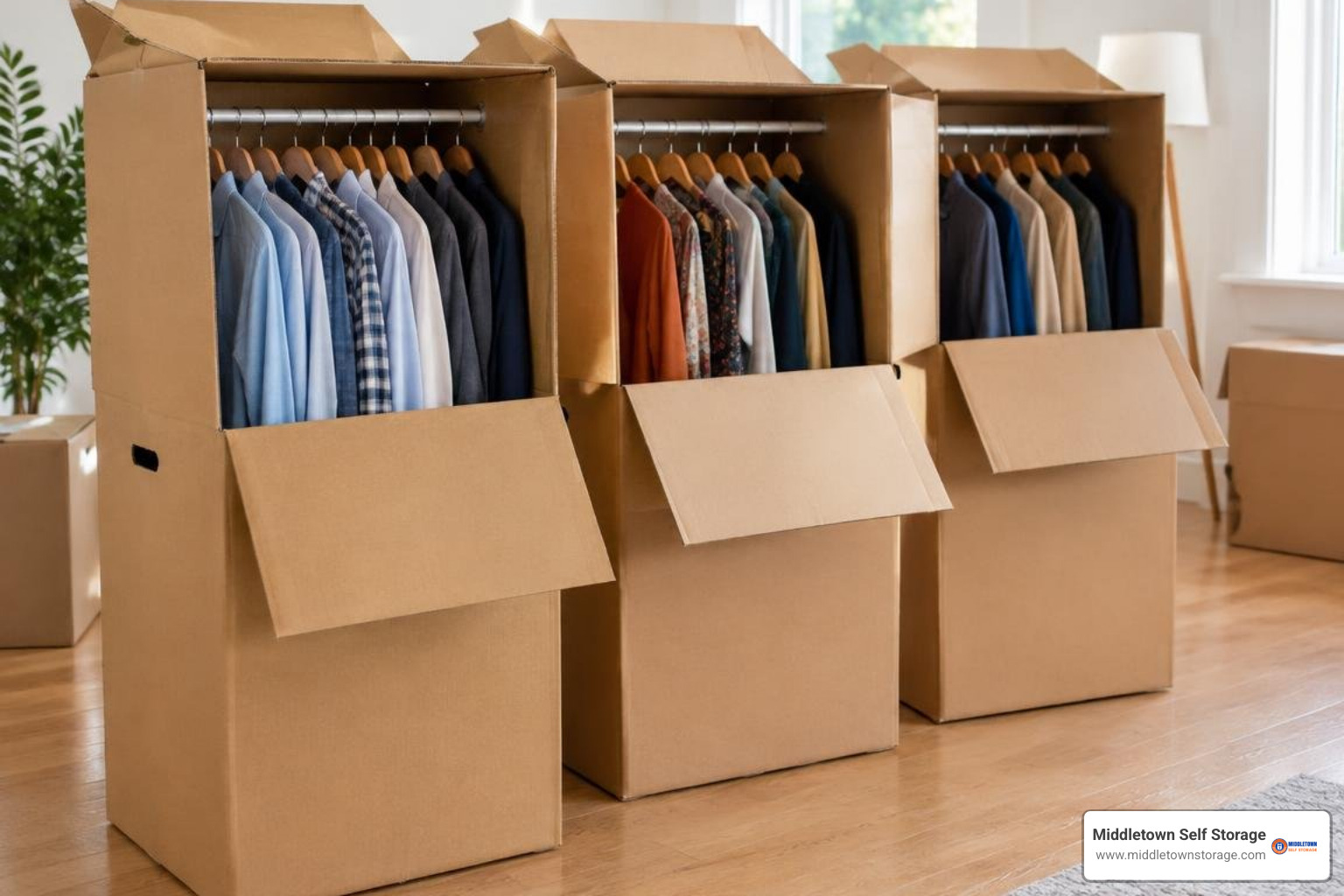
Hanging clothes are notoriously vulnerable during transit. Standard wardrobe boxes are tall, reinforced corrugated boxes equipped with a built-in metal hanging bar that allow you to transfer clothes directly from closet rod to box in seconds.
Here are the key points to remember when using wardrobe boxes:
- The Two-Foot Rule: One standard wardrobe box holds roughly 2 feet (24 inches) of hanging closet space.
- Garment Capacity: A single box typically accommodates 8–12 dress shirts, 4–6 suits or dresses, 6–8 pairs of slacks, or 3–4 heavy winter coats.
- Weight Awareness: When fully loaded, a wardrobe box weighs between 40 and 60 pounds. Place lighter items (like clean pillows, folded scarves, or plush blankets) at the base to optimize space without exceeding weight limits.
For short local trips, bundling 5–10 hangers with heavy-duty rubber bands and slipping a drawstring moving bag over them works well. However, thin standard trash bags offer zero puncture protection, tear easily, and trap condensation on longer journeys.
Using Dresser Drawers and Vacuum Storage Bags
Leaving clothing inside your furniture is convenient, provided you only leave lightweight items like underwear, socks, or pajamas. Never pack heavy jeans or thick knit sweaters in solid wood furniture, as the added weight can rack the dresser frame and strain joint joinery during transit.
Secure drawers by wrapping the entire dresser exterior with industrial stretch wrap to keep drawers from sliding open without leaving adhesive residue on wood finishes. Vacuum storage bags compress bulky seasonal gear like down jackets, comforters, and fleece blankets by up to 80 percent.
However, ensure every item is completely dry before sealing to avoid trapped humidity. Reviewing tips on protecting fabrics from moisture damage helps safeguard seasonal textiles before long-term packing.
If you are moving across Newport, Portsmouth, Jamestown, or Aquidneck Island, Middletown Self Storage offers climate-controlled units at both its Valley Road and Aquidneck Ave locations to keep your wardrobe fresh between moves.
Step-by-Step Guide to Packing Specialty Garments and Footwear
Specialty fabrics and footwear require dedicated methods to prevent crushing, scuffing, and structural distortion during a move.
The Best Way to Pack Clothes for Moving Delicates and Designer Wear
Delicates like silk, fine lace, cashmere, and beaded evening gowns should never be rolled or jammed tightly into standard cartons.
- Use Acid-Free Tissue Paper: Wrap silk blouses and evening wear in plain, acid-free tissue paper to prevent fabric-on-fabric friction, color transfer, and fabric yellowing over time.
- Breathable Garment Bags: Store suits, blazers, and evening gowns in breathable fabric garment bags inside upright wardrobe boxes rather than non-breathable plastic wraps.
- Structured Shoulders: Use padded or wide wooden hangers for tailored jackets and coats to preserve shoulder pads and drape integrity.
- Long-Distance Protection: Long-distance moves require sturdy containers, and reviewing how to pack wardrobe boxes for long transit to help prevent crushing valuable outfits.
How to Pack Shoes and Bulky Accessories Without Damaging Outfits
Packing shoes in the same box as clean clothing is a recipe for dirt transfer, scuffs, and snags. Footwear requires separate, organized handling to maintain its original form.
- Stuff Shoe Interiors: Stuff the toes of shoes, heels, and boots with clean rolled socks or tissue paper to maintain structural shape and prevent creasing under pressure.
- Pack Separately: Place shoes in original boxes or individual cloth shoe bags, arranging heavier boots at the bottom of medium moving boxes and lighter sandals on top.
- Protect Hat Crowns: Place brimmed hats in dedicated cartons, filling the crown interior with soft scarves or tissue paper to prevent flattening and brim warping.
- Cushion Accessories: Use dedicated organizers or soft protective cushioning for delicate items to isolate jewelry clasps, belts, and metal buckles from snagging adjacent fabrics.
Common Clothing Packing Mistakes to Avoid
- Packing Damp Clothes: Even slightly damp garments will develop mold and mildew inside sealed boxes within 48 hours. Always ensure laundry is completely dry before boxing.
- Packing Unwashed Items: Storing worn garments attracts fabric pests such as moths and silverfish, which feed on lingering skin oils and food residues.
- Exceeding Box Weight Limits: Dense boxes of clothing can easily exceed 40 to 50 pounds. Keep individual boxes under 30 pounds to protect box seams and prevent back injuries.
- Using Printed Newspaper: Newsprint ink readily transfers onto damp or light fabrics, creating permanent stains. Use blank packing paper instead.
- Ignoring Temperature Control: Storing packed garments in damp basements or unventilated areas risks moisture damage. Learn about preventing humidity and mildew in stored clothing if items will remain boxed between moves.
Packing your wardrobe efficiently saves hours of ironing and protects your favorite garments from damage. Grouping items by fabric type, using wardrobe boxes for hanging pieces, and packing an essentials bag makes settling into your new space effortless.
If you are transitioning homes, downsizing, or renovating across Newport, Portsmouth, Jamestown, or Aquidneck Island, Middletown Self Storage offers modern secure climate-controlled self storage units to keep your wardrobe fresh.
Stop by our convenient Valley Road or Aquidneck Ave facilities in Middletown, Rhode Island, to find ground-level storage solutions and premium packing supplies for your next move.